While direct-to-consumer (B2C) membership sales form the traditional foundation of gym revenue, relying solely on individual walk-ins leaves fitness facilities vulnerable to seasonal dips, unpredictable churn, and escalating digital advertising costs. Forward-thinking gym owners and fitness club operators are unlocking massive, highly predictable recurring revenue streams by tapping into the business-to-business (B2B) corporate wellness sector. A single corporate wellness agreement can instantly inject 50 to 500+ active members into your facility, securing guaranteed annual cash flow and establishing high-value corporate partnerships.
In today's competitive corporate landscape, human resource departments and enterprise leadership are prioritizing employee wellness like never before. With sedentary desk jobs contributing to chronic lifestyle diseases, employee burnout, and rising corporate healthcare insurance premiums, businesses are actively investing in preventative fitness solutions. In this comprehensive guide, we unpack the complete playbook for prospecting, pitching, structuring, and managing lucrative gym corporate memberships that generate substantial B2B revenue.
1. The B2B Advantage: Why Corporate Deals Transform Gym Economics
Securing corporate membership contracts transforms the financial stability of a commercial gym or boutique fitness studio in several fundamental ways:
- Predictable, Bulk Cash Flow: Corporate contracts are typically negotiated on quarterly or annual billing cycles, providing substantial upfront capital that smooths out seasonal consumer fluctuations.
- Off-Peak Floor Utilization: Corporate employees often utilize gym facilities during early morning hours (6:30 AM – 8:30 AM) or lunch breaks (12:00 PM – 2:30 PM), effectively monetizing underutilized gym floor capacity without crowding peak evening hours.
- Lower Member Acquisition Costs (CAC): Acquiring 100 individual B2C members requires substantial digital ad spend and front-desk sales effort. Acquiring 100 corporate members requires closing a single successful pitch with an HR director.
- High Secondary Revenue Potential: Corporate members possess higher disposable incomes and frequently invest in high-margin auxiliary services, including 1-on-1 personal training, specialized group classes, and nutrition supplements.
"In the B2C world, you fight for every single monthly subscription. In the B2B world, one corporate handshake can fill your gym floor and secure your operational rent for the entire year."
2. 3 High-Yield Corporate Partnership Models
Different enterprises have varying budget allocations for employee benefits. When approaching prospective corporate clients, offering flexible packaging models significantly increases your closing rate:
| Partnership Model | Payment Structure | Ideal Target Company |
|---|---|---|
| 1. Fully Subsidized (Employer-Paid) | Company pays 100% of the membership fees via bulk annual or quarterly corporate invoices. | Tech firms, consulting companies, multinational enterprises, funded startups competing for top talent. |
| 2. Co-Pay (Shared Contribution) | 50% paid by the employer via corporate billing, 50% deducted directly from employee monthly payroll. | Mid-sized corporations, manufacturing firms, regional banks seeking high employee commitment with shared cost. |
| 3. Preferred Corporate Discount Tier | Zero financial cost to employer; employees receive an exclusive 20%–30% discount when presenting work credentials. | Companies without dedicated wellness budgets; excellent "foot-in-the-door" strategy to build initial relationship. |
3. The Step-by-Step B2B Pitching & Sales Playbook
Closing corporate accounts requires a professional, structured consultative sales approach. Follow this proven four-phase sales cycle:
Phase 1: Territory Mapping & Decision-Maker Identification
Map out all commercial office buildings, IT parks, financial centers, and co-working hubs within a 3 to 5-kilometer radius of your facility. Use professional networking platforms like LinkedIn to identify key decision-makers:
- Chief Human Resources Officers (CHRO) & HR Directors
- Heads of Total Rewards & Employee Benefits
- Employee Engagement Leads & Corporate Wellness Committee Chairs
- Managing Directors / Branch Heads in mid-sized commercial firms
Phase 2: The ROI-Centric Value Proposition
When presenting to corporate leadership, do not pitch "dumbbells, treadmills, and locker rooms." Corporate executives care about financial outcomes and organizational health. Structure your presentation around three business metrics:
- Reducing Absenteeism & Healthcare Costs: Active employees take an average of 2.7 fewer sick days per year, directly reducing lost productivity and group medical claims.
- Combating Workplace Burnout & Boosting Retention: Physical exercise is clinically proven to reduce cortisol, elevate cognitive focus, and enhance employee job satisfaction.
- Strengthening Employer Branding: A subsidized gym benefit acts as a powerful talent recruitment magnet for prospective hires.
Phase 3: The "Trojan Horse" On-Site Wellness Day
Rather than pushing an aggressive sales contract during the first meeting, propose a Free Corporate Wellness Day at their office. Bring your head trainers and certified nutritionists to conduct:
- Complimentary non-invasive Body Composition Scans (InBody / Body Fat %)
- Ergonomic posture assessments and desk-mobility stretch clinics
- 15-minute lunchtime keynote: "Beating Stress & Sustaining High Energy Through Nutrition"
- Distribution of complimentary 7-Day VIP Executive Trial Passes to all attending staff
This experiential activation builds immediate goodwill, generates hundreds of warm employee leads, and gives HR concrete proof of overwhelming employee interest.
Phase 4: Contract Negotiation & SLA Finalization
Once employee interest is demonstrated, present a formal Corporate Partnership Agreement. Clearly define minimum headcount thresholds (e.g., minimum 20 active members), payment terms (Net 30 days via bank transfer), billing frequency, and standard operating service levels (SLAs).
"HR managers don't buy gym equipment; they buy healthier, more productive teams that stay with the company longer. Frame your gym as an employee performance investment."
4. Retention: Delivering Monthly Corporate Usage & ROI Reports
The primary reason corporate wellness contracts fail to renew after year one is a lack of accountability. If the HR Director cannot prove to the Chief Financial Officer (CFO) that employees actively utilized the benefit, the budget is cut. To ensure 100% annual renewal rates, gym operators must deliver automated, monthly Corporate Wellness Utilization Reports detailing:
- Total number of enrolled corporate employees vs. active floor check-ins.
- Aggregate workouts completed and cumulative facility hours logged.
- Attendance streaks and top corporate fitness champions.
- Group class participation statistics (Yoga, HIIT, Spin, Strength).
5. How Fitplex Powers Seamless Corporate Membership Management
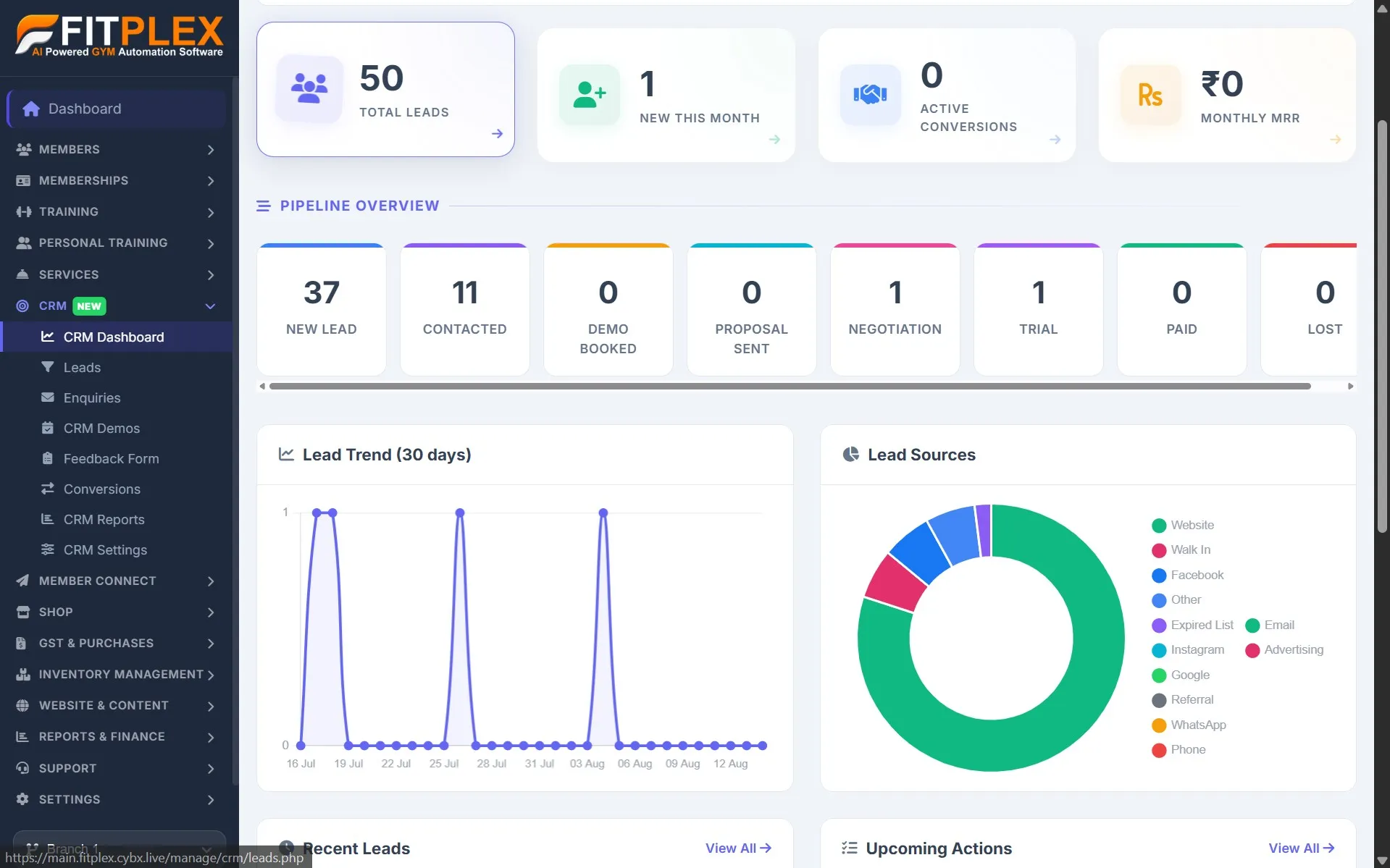
Managing corporate partnerships on spreadsheets or legacy software quickly leads to administrative chaos. Adding new hires, revoking departed employees, tracking corporate attendance, and generating consolidated GST invoices creates massive friction. Fitplex Gym Management Software automates the entire corporate B2B workflow:
- Dedicated B2B Corporate Billing Profiles: Fitplex allows you to group individual member accounts under parent Corporate Master Profiles. Configure custom subsidy percentages, co-pay splits, or discounted corporate rate tiers in seconds.
- Automated Domain-Based Email Verification: Streamline employee onboarding by allowing staff to self-register via the Fitplex Member App using their official company email (e.g., name@company.com). Fitplex automatically validates their work domain and assigns the corporate package.
- Biometric Check-in Sync & Corporate Attendance Tracking: Every time a corporate employee checks in via Face Recognition, QR turnstiles, or RFID gates, Fitplex logs the visit under their corporate profile in real time.
- Automated Monthly HR Utilization Reports: With one click, generate comprehensive, beautifully formatted PDF and Excel usage reports showing aggregate attendance and employee engagement metrics ready for corporate HR presentations.
- Consolidated GST-Compliant B2B Invoicing: Eliminate manual billing. Fitplex automatically generates consolidated, itemized tax invoices with complete B2B GSTIN compliance, corporate PAN details, and automated payment receipts.
By leveraging Fitplex to manage your corporate wellness partnerships, you establish a scalable, professional B2B fitness business that secures predictable corporate revenue year after year.